Dell Hyperconverged Infrastructure

Steel City Consulting is a certified Dell partner for new and refurbished hardware.

IT teams that need to keep VMware estates under control as they grow can use Dell Hyperconverged Infrastructure to combine compute, storage and lifecycle management in one platform. It reduces stack sprawl and gives a consistent way to run virtual infrastructure without adding separate server and storage layers.

For smaller sites, VDI and more demanding virtual workloads, it supports predictable growth and steadier performance. Cost-effective nodes suit remote or entry-level deployments, while performance-focused nodes give more headroom for I/O-heavy services, helping teams keep applications responsive and management overhead contained.

Dell Hyperconverged Infrastructure Quick Specs & Key Features

  • Pre-integrated VMware platform: VxRail combines compute, storage and VMware management in one cluster, which reduces setup effort and removes separate server and storage stacks.
  • Lifecycle automation: VMware-ready automation supports coordinated patching and updates across the cluster, which helps keep operations consistent for small teams.
  • All-flash local storage: Both nodes use all-flash storage in the server, which supports faster access for virtual machines and shared workloads.
Read more
  • Scalable node options: The E560F suits smaller and remote sites, while the P570F adds more processor and expansion headroom for denser estates.
  • Workload-specific capacity: The E560F fits entry-level VDI and graphics use, while the P570F is built for in-memory and I/O-intensive workloads.
  • Predictable cluster operations: Standardised VxRail management supports the same operational approach across clinics, branches and development labs.
Steel City Consulting logo

Comparing multiple platforms? Our experts are available to help.

No commitment needed, no hard sells. Just straightforward technical guidance tailored to your infrastructure.

Find your ideal Dell Hyperconverged Infrastructure

Full technical specifications are available on each product page.

Model Popularity Deployment Primary Use Case Form Factor CPU Vendor Processor Platform Maximum CPUs Supported Maximum Memory Capacity Memory Slots Maximum GPUs Supported
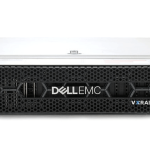
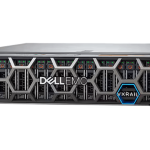
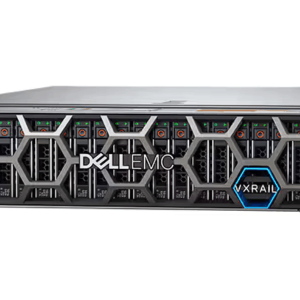
Dell Poweredge VxRail P570F Hyperconverged System Dell Poweredge VxRail P570F Hyperconverged System Data Centre Hyperconverged Infrastructure 2U Intel Xeon Scalable / 2nd Gen 2 3 TB 24 3 View
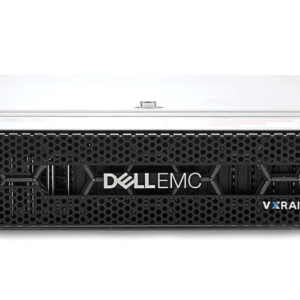
Dell Poweredge VxRail E560F Hyperconverged System Dell Poweredge VxRail E560F Hyperconverged System Data Centre Hyperconverged Infrastructure 1U Intel Xeon Scalable / 2nd Gen 2 3 TB 24 2 View

Dell Hyperconverged Infrastructure Deployment Scenarios and Industries

Data Centres

Data centre teams need to simplify VMware operations, reduce infrastructure sprawl and scale from a small starting point without adding unnecessary complexity. Dell Hyperconverged Infrastructure supports this with pre-integrated virtual infrastructure, lifecycle automation and a path to higher performance for denser virtual estates.

Professional Services

Professional services firms often run line-of-business applications and VDI with small IT teams. Dell Hyperconverged Infrastructure helps them manage virtual environments more easily, giving users consistent access to business systems without separate server and storage stacks.

Healthcare

Healthcare teams in clinics and departments need reliable virtual infrastructure with simple lifecycle management and resilience. Dell Hyperconverged Infrastructure provides a standardised VMware platform that supports local operations while keeping administration straightforward.

Finance

Finance teams need controlled growth, consistent operations and support for branch or departmental workloads. Dell Hyperconverged Infrastructure gives them resilient local VMware services with low on-site overhead, while also supporting performance for latency-sensitive virtual workloads.

Software Development

Software development teams need rapid VM provisioning and standardised environments for dev/test, build pipelines and internal services. Dell Hyperconverged Infrastructure supports this with VMware-based virtual platforms that reduce manual work and avoid the complexity of separate infrastructure layers.

Dell Hyperconverged Infrastructure Management and Licensing Options

OpenManage Enterprise

OpenManage Enterprise gives IT teams a central platform to monitor Dell PowerEdge infrastructure, deploy firmware updates, and apply consistent configurations at scale. This helps reduce manual administration, improve visibility, and keep server environments easier to manage as workloads grow.

Speak to a Dell Specialist

AI-Driven Analytics and Optimisation (CloudIQ)

CloudIQ continuously monitors Dell server environments, highlights performance trends, and flags risks before they affect workloads or users. This gives IT teams clearer operational visibility, faster troubleshooting, and more time to focus on planned infrastructure priorities.

Explore Dell CloudIQ

Containers and Kubernetes

Dell integrations with platforms like Red Hat OpenShift and VMware Tanzu help standardise compute, storage, and networking across Kubernetes environments. This makes containerised workloads easier to deploy, manage, and scale on PowerEdge infrastructure.

Ask us about Dell Kubernetes

Dell Infrastructure Support

As an authorised Dell partner, we help organisations select, configure, and manage the right server platforms and management tools for their environment. From deployment through to ongoing support, we help IT teams keep infrastructure scalable, reliable, and easier to operate long term.

Contact Our Dell Specialists

As an authorised Dell partner, we help organisations select, configure, and manage the right combination of server platforms and management tools to keep infrastructure running efficiently as it grows. Contact our Dell specialists for guidance today.

Shop All Dell Hyperconverged Infrastructure Models

Browse our full range below, or contact our team for tailored configuration advice.

Designing & Supporting Dell Hyperconverged Infrastructure Solutions

Backed by decades of expertise in the IT sector, our specialists support every stage of your deployment — from initial selection through to long-term lifecycle management.

  • Infrastructure Assessment & Server Selection: We assess your rack space, power capacity, workloads, and compliance requirements before making any recommendations. You get the right Dell PowerEdge platform for your environment, not an over-specified solution that costs more than necessary.
  • Deployment & Integration: Our engineers handle racking, cabling, OS configuration, firmware, and integration with your existing infrastructure. Everything is tested and validated before handover, so your team can focus on operations from day one.
  • Workload Optimisation & Scalability Planning: We help you identify the right starting point across the PowerEdge range and plan a clear path for growth. Infrastructure scales with operational demand, avoiding unnecessary upgrades or stranded capacity further down the line.
Read more
  • Flexible Maintenance & Support: Our third-party support is matched to your workload criticality. From next-business-day replacement options, through to 24/7 support and 4-hour hardware replacement windows, we recommend what fits your business – not what upsells.
  • Lifecycle Management: We manage firmware, patches, end-of-life planning, and staged refresh cycles to protect your investment. Where third-party maintenance extends the value of older hardware, we honestly factor that into your planning.

Dell Hyperconverged Infrastructure FAQ

Why do organisations choose Dell Hyperconverged Infrastructure as the foundation for VMware environments instead of managing separate compute, storage, and networking platforms?

Traditional infrastructure separates compute, storage, and networking into different systems, increasing management complexity as environments grow.

Dell Hyperconverged Infrastructure combines compute, storage, and virtualisation into a single software-defined platform. Dell VxRail simplifies deployment, scaling, and VMware operations, helping IT teams reduce operational overhead and expand workloads more easily.

How do organisations choose between the Dell VxRail E560F and P570F when planning hyperconverged deployments?

The E560F suits smaller deployments, branch offices, stretched clusters, and entry-level VDI — environments where operational simplicity and cost efficiency matter more than raw processing headroom. It provides balanced compute with all-flash storage in a straightforward VMware-ready package.

The P570F is the appropriate choice where workloads are more demanding — dense virtualisation, latency-sensitive databases, high-I/O development platforms, or clinical systems that need consistent responsiveness under load. It delivers greater processor capacity and expansion headroom on the same VMware lifecycle automation foundation.

Why do organisations use Dell Hyperconverged Infrastructure for virtual desktop and remote user environments instead of traditional SAN-based platforms?

Traditional SAN-based virtual desktop environments can become complex as storage, compute, and user demand grow across separate infrastructure layers. As remote users increase, bottlenecks between compute and storage can make environments harder to manage.

Dell Hyperconverged Infrastructure keeps compute and storage integrated within a single cluster, helping virtual desktop workloads scale more consistently.

Dell VxRail supports VMware virtualisation, VDI, and remote working environments with simplified management. For IT teams, this provides more predictable performance, easier scaling, and less infrastructure tuning.

Why is Dell Hyperconverged Infrastructure often deployed in multi-site or branch environments instead of maintaining separate infrastructure stacks at every location?

Managing separate server, storage, and backup platforms across multiple locations increases operational complexity, especially in smaller branch environments.

Dell Hyperconverged Infrastructure uses a standardised cluster model to simplify management across multiple sites. Dell VxRail is designed for distributed and branch environments, helping IT teams reduce complexity, maintain consistency, and scale infrastructure more easily.

Why do organisations use Dell Hyperconverged Infrastructure as the foundation for private cloud instead of assembling separate platforms manually?

Building private cloud infrastructure from separate platforms provides flexibility, but it also increases integration and management complexity as environments grow.

Dell Hyperconverged Infrastructure uses a unified software-defined architecture for private cloud and VMware environments. Dell VxRail integrates with VMware Cloud Foundation to simplify scaling and management. For IT teams, this reduces engineering overhead and makes infrastructure expansion easier.

Why do organisations running public cloud services still deploy Dell Hyperconverged Infrastructure on-premises?

Public cloud platforms reduce the need to manage physical infrastructure, but they can increase ongoing costs, reliance on internet connectivity, and reduce control over performance and data placement. For low-latency workloads or data residency requirements, this can become a challenge over time.

Dell Hyperconverged Infrastructure provides cloud-like scalability within infrastructure organisations directly control. Dell positions VxRail for hybrid cloud and VMware Cloud Foundation environments requiring consistent operations across on-premises and cloud-connected workloads.

For IT teams, this provides a more flexible way to manage hybrid infrastructure with better control over performance, costs, and data handling.

Need a different solution?

If these options aren’t the right fit for your environment, we provide a wide portfolio of product series and solutions that may better suit your infrastructure. Explore below, or speak to our team and we’ll help you find the right match.

Ready to discuss your requirements?

Whether you know exactly what you need or you’re still evaluating options, our team is available for a no-obligation conversation.

A group discussing IT solutions