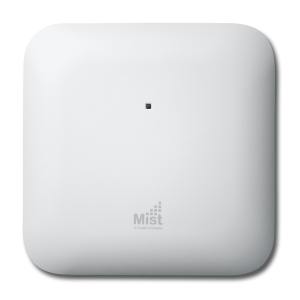
Q1: How does Juniper Mist optimise Wi-Fi performance in large enterprise and data centre environments? Juniper Mist access points use AI-driven Radio Resource Management (RRM) to automatically adjust channel width, power levels, and interference avoidance based on live telemetry. Features like band steering and client load balancing optimise performance in high-density enterprise and data centre deployments without manual RF tuning.
Q2: What makes Juniper Mist access points suitable for high-density use cases?
Juniper Mist models support Wi-Fi 6, Wi-Fi 6E, and Wi-Fi 7 with 4×4:4 MIMO radios, OFDMA, and MU-MIMO, enabling thousands of concurrent connections. Combined with multi-gigabit Ethernet backhaul (available on models like the AP43 and AP47) and AI-driven optimisation, they deliver enterprise-grade performance in dense environments.
Q3: How do Juniper Mist access points support Zero Trust security strategies?
Juniper Mist APs include dedicated scanning radios that continuously monitor for rogue devices, honeypots, and spectrum threats. All traffic is encrypted, and integration with Juniper’s wider security portfolio extends policy enforcement. This visibility and telemetry underpin Zero Trust strategies by validating devices and reducing blind spots in enterprise networks.
Q4: What visibility and troubleshooting tools are available for Juniper Mist customers?
Every Juniper Mist AP streams detailed telemetry to the Mist cloud, providing real-time analytics on client health, throughput, and RF conditions. Marvis, Juniper’s AI engine, delivers proactive insights, root-cause analysis, and natural-language troubleshooting, helping IT teams in data centres and enterprises resolve issues faster and enforce service level expectations (SLEs).
Q5: How does Juniper Mist enable location services in enterprise and data centre facilities?
Juniper Mist access points integrate a patented 16-element virtual Bluetooth LE array that delivers 1–3 m location accuracy. This supports wayfinding, asset tracking, and IoT automation without the need for battery-powered beacons—an advantage for large enterprise campuses and high-value data centre operations.
Q6: What deployment and management advantages do Juniper Mist access points offer businesses?
Juniper Mist is a cloud-native platform with zero-touch provisioning, microservices-based updates, and global scalability. IT teams can roll out consistent policies across thousands of sites, automate firmware management, and leverage AI insights to detect anomalies—simplifying operations for enterprise and data centre environments.