










Power, Cooling & Infrastructure Management Solutions

Efficient power and cooling infrastructure. Designed for resilient IT environments.

The Challenge of Supporting Modern Infrastructure

Data centres, server rooms, and edge sites are under growing pressure as workloads intensify, rack densities climb, and AI infrastructure reshapes power and cooling requirements. Many existing facilities were never designed for today's thermal loads, energy costs, or the level of remote oversight modern operations demand.

As a result, organisations face a consistent set of challenges:

  • Increasing rack densities driving power draw and heat output well beyond what legacy PDUs, UPS systems, and cooling designs were specified to handle.
  • AI and GPU power demands concentrating extreme loads into individual racks, requiring higher-capacity distribution, three-phase power, and rethought cooling strategies.
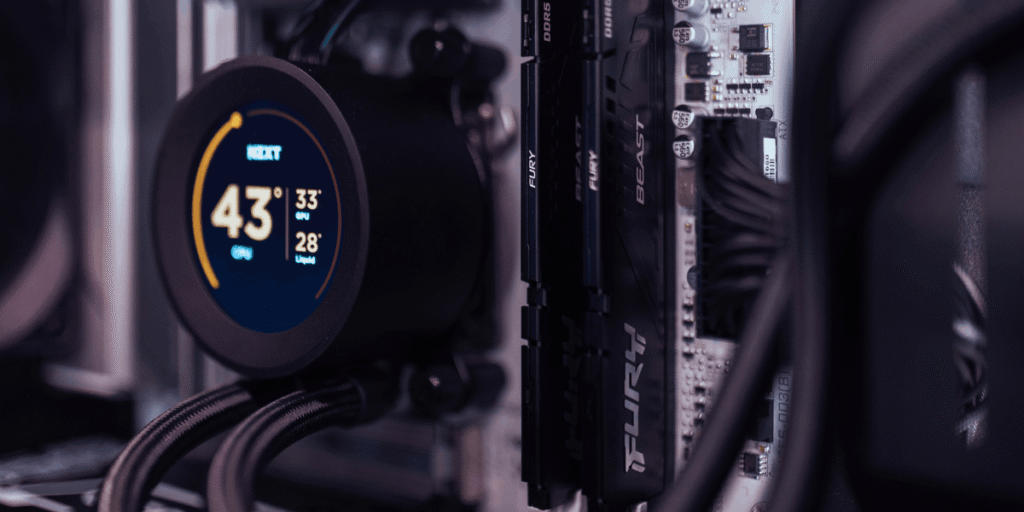
  • Cooling limitations as traditional air-based approaches reach their thermal ceiling, pushing operators toward rear-door heat exchangers, in-row cooling, and liquid-cooled architectures.
  • Rising energy costs making power efficiency, PUE, and accurate consumption monitoring central to both operational budgets and sustainability reporting.
  • Limited visibility across power, environmental, and infrastructure metrics, with fragmented tooling making it difficult to track capacity, identify hotspots, and plan upgrades with confidence.
  • Remote site management requirements for edge locations, branch comms rooms, and unstaffed facilities where power, cooling, and access need to be monitored and controlled centrally.
  • Infrastructure resilience demands as downtime costs rise, requiring redundant power paths, monitored battery health, and proactive alerting before failures impact services.

These challenges directly impact uptime, operating costs, and the ability to deploy higher-density and AI-ready workloads with confidence.

Modern power, cooling, and infrastructure management solutions address this through intelligent PDUs, scalable UPS and battery systems, high-density and liquid cooling, environmental monitoring, and centralised DCIM platforms that provide visibility across every site.

Common Power & Infrastructure Challenges — And How We Solve Them

Here are some of the most common challenges we help these environments to overcome:

Power Resilience & Business Continuity

Challenge

Even brief power interruptions can disrupt services, damage equipment and trigger costly downtime across data centres, server rooms and edge sites.


Solution

  • We deploy scalable UPS systems, monitored battery backup and redundant power distribution to keep critical infrastructure online through outages and maintenance windows.

Cooling Capacity & Thermal Management

Challenge

Rising rack densities and AI-driven workloads are pushing traditional air cooling beyond its limits, creating hotspots and constraining what can be deployed.


Solution

  • We design high-density cooling strategies using in-row units, rear-door heat exchangers and liquid cooling to support modern compute loads reliably.

Rising Energy Costs & Efficiency Targets

Challenge

Energy prices and sustainability commitments are placing data centre power consumption under closer scrutiny, with PUE and reporting now central to operational planning.


Solution

  • We deploy intelligent PDUs, environmental monitoring and DCIM platforms that surface consumption data, identify inefficiencies and support measurable PUE improvements.

Remote Site Visibility & Management

Challenge

Edge locations, branch comms rooms and unstaffed facilities are difficult to monitor consistently, with issues often going undetected until they cause downtime.


Solution

  • We implement centralised monitoring, networked PDUs and environmental sensors that give a single view of power, temperature and access across every site.

Infrastructure Growth & Capacity Planning

Challenge

Adding new workloads, GPU clusters or additional racks often hits limits in available power, cooling or floor space that weren't visible until the point of deployment.


Solution

  • We use DCIM tooling and capacity assessments to model power, cooling and rack utilisation, giving a clear basis for upgrades, expansion and refresh planning.
Steel City Consulting logo

From scalable UPS and high-density cooling through to intelligent PDUs, DCIM and ongoing support, we deliver the power and infrastructure modern data centres depend on.

A Structured Approach to Modern Power & Cooling Infrastructure

Every data centre and server room is built in layers. The decisions made at each stage determine uptime, efficiency, and how reliably infrastructure can scale as workloads and densities grow. We work with leading vendors to design and deliver solutions across each layer—ensuring the right technology is selected for your power, cooling, and capacity requirements.
01

Power Resilience & Backup Infrastructure

Scalable UPS, intelligent power distribution, high-density cooling and resilient rack infrastructure all need specifying around the loads they support, with redundancy built in to keep critical workloads running when conditions change.

We work with APC platforms to design, deliver and support the right combination for each environment, from initial sizing through to ongoing maintenance. 

Common UPS Approaches

Approach Best for
Line Interactive UPS Small sites and edge locations where compact, cost-effective protection against surges and short outages is the priority
Online Double Conversion UPS Enterprise and data centre environments where critical loads need fully isolated, conditioned power with zero transfer time
Modular UPS Platforms Growth and scalability scenarios where capacity needs to expand in line with rack density and workload demand
Distributed UPS Architectures Multi-site organisations where local resilience is needed at branches, edge sites and remote facilities alongside core data centres

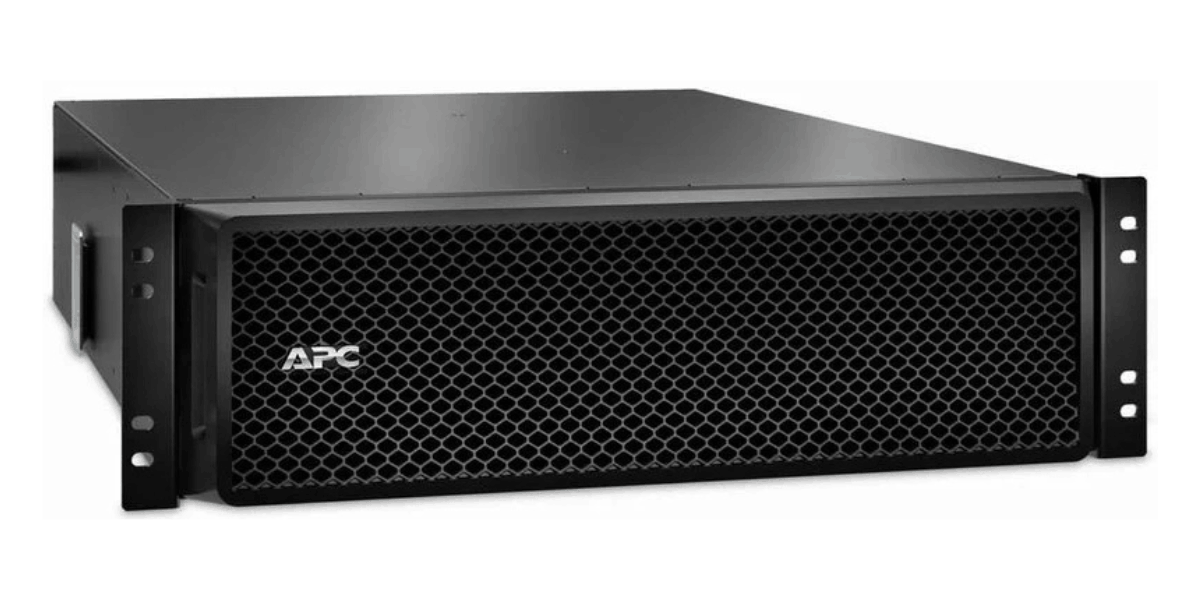
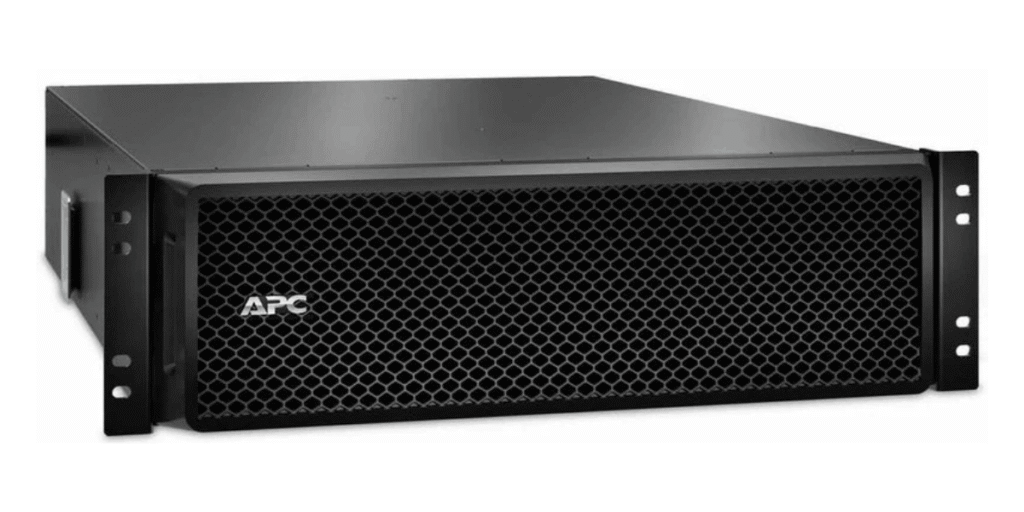
APC UPS Platforms

UPS & power protection Keeping critical infrastructure online through power events, surges and short outages across data centres, server rooms and distributed sites.
02

Data Centre Power Infrastructure

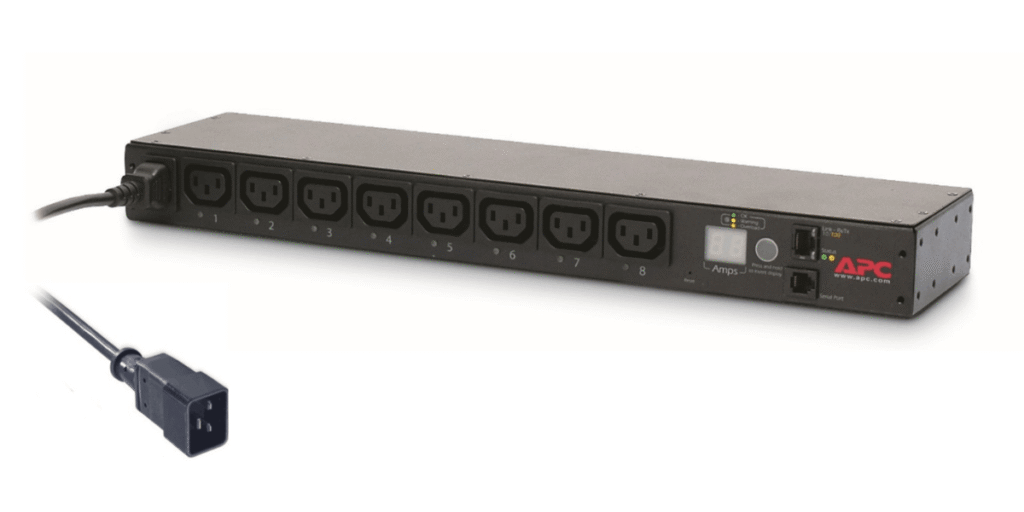
Power distribution sits between the UPS and the rack, and the choices made here shape resilience, visibility and how easily capacity can grow. We specify the right mix of basic and intelligent rack PDUs, with per-outlet monitoring and remote control where uptime and oversight matter most.
Traditional Intelligent
Basic power delivery with no insight into how power is drawn at the rack Monitoring and analytics with per-outlet metering and consumption data
Limited visibility of rack-level load, leaving decisions based on assumption Remote management with outlet-level switching, scheduled cycles and central control
Manual capacity tracking through audits and spreadsheets that fall out of date Real-time utilisation insights feeding capacity planning and density decisions

APC Power Distribution Units, Racks and Enclosures

Power distribution & rack infrastructure Delivering metered, switched and managed power to the rack, with enclosures sized for server, network and high-density deployments.

Designed for: Data centres, server rooms and comms rooms where rack-level power distribution and physical infrastructure need to be specified together, from basic and metered PDUs through to switched units and full enclosure systems.

03

Cooling & Thermal Management

APC power and cooling solutions are designed to keep critical IT environments stable as rack densities rise. From UPS and power protection through to in-row, high-density and liquid cooling, the right infrastructure keeps heat, load and efficiency under control.

We help assess your current setup, identify power and cooling constraints, and specify the right APC solution for your environment.

Traditional Cooling InRow Cooling
General purpose environments where average rack loads sit within standard thermal ranges High-density environments where concentrated rack loads exceed what general cooling can support
Room-level cooling distributing cold air across the whole space, regardless of where heat is generated Rack-level cooling positioned next to the load, removing heat at the source before it mixes with room air
Lower deployment complexity with familiar CRAC/CRAH units and established containment approaches Greater cooling efficiency with shorter air paths, tighter temperature control and lower PUE impact
Steel City Consulting logo

Looking for a broader view across power and cooling? Visit our Power & Cooling Solutions page to explore the full range cooling and infrastructure support we deliver and to book a free cooling assessment with our experts. 

04

Infrastructure Visibility, Monitoring & Automation

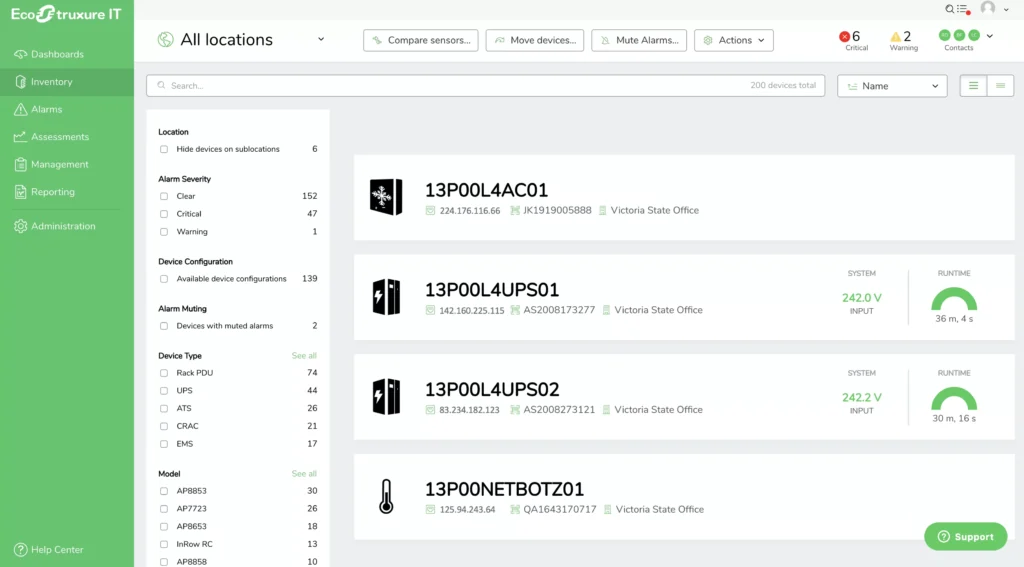
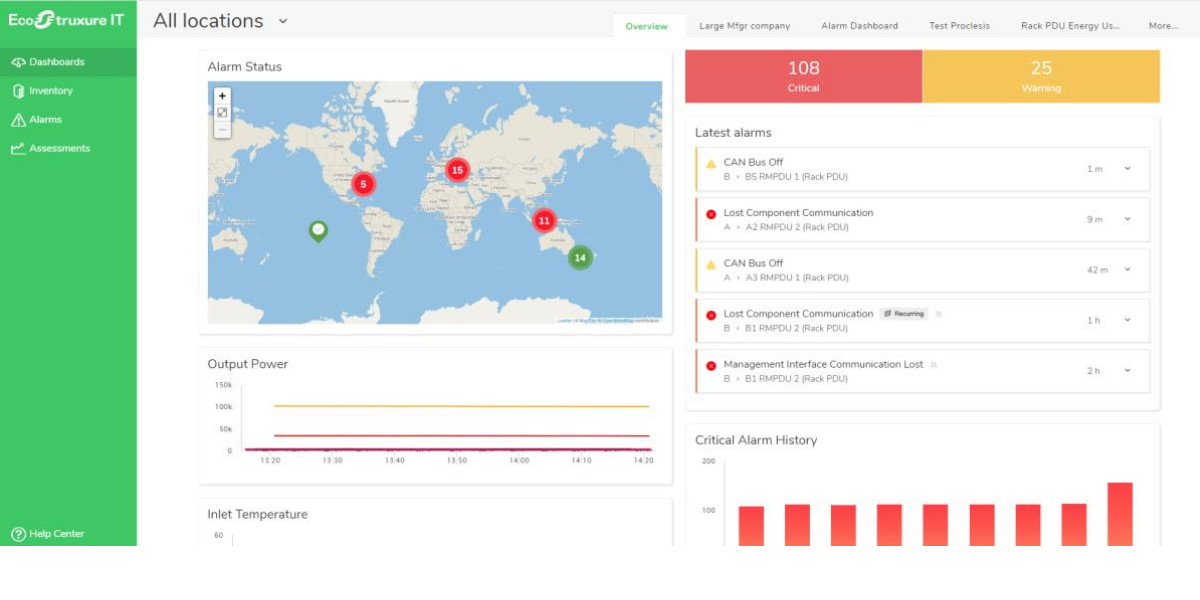
Environmental sensors, network management cards and EcoStruxure IT bring UPS status, PDU load, rack temperature and capacity headroom into a single view, so issues are caught before they affect uptime.

We help assess your current visibility, identify monitoring gaps across power and cooling, and specify the right APC platform to bring it all into one place.

Reactive vs Proactive Monitoring Capabilities

Local & Reactive Monitoring Centralised & Proactive Monitoring
Site-by-site visibility with separate tools and dashboards for each location, and limited insight between visits or incidents Estate-wide visibility bringing power, cooling and environmental data from every site into one console in real time
Manual reporting and intervention driven by local logs, spreadsheets, user reports and physical checks of UPS, PDU and cooling status Automated alerting and insights on power, thermal and environmental thresholds, with scheduled reporting and trend analysis across the estate
Respond to failures after they've already disrupted services, often under pressure and outside business hours Identify issues before they impact services, surfacing capacity, thermal and power risks with time to plan remediation

Proactive Infrastructure Management with EcoStruxure IT

Monitoring & management Bringing UPS, PDU, cooling and environmental data into a single view across data centres, server rooms and edge sites.

Designed for: Data centre, IT and facilities teams needing a single view of power, cooling and environmental conditions across central, distributed and edge sites — with vendor-agnostic monitoring, automated alerting and capacity insights.
05

Edge Infrastructure & Micro Data Centres

Edge sites need the same power resilience and cooling control as a central data centre, but packaged differently.

APC Secure Micro Data Centres (SMDC) and edge enclosures deliver rack, UPS, cooling and environmental monitoring as one integrated unit, so remote locations get data centre-grade protection without data centre overhead.

Traditional Infrastructure Micro Data Centres
Dedicated server rooms with separately specified racks, UPS, cooling and security, designed and commissioned as individual elements Self-contained deployments integrating rack, power, cooling, monitoring and physical security as a single pre-engineered platform
Centralised infrastructure built around core data centre or HQ locations, with remote sites depending on connectivity back to the centre Distributed edge environments placing compute, storage and resilience locally at retail, healthcare, industrial and branch sites
Larger facilities requiring dedicated space, multi-vendor coordination and longer lead times to design and deploy Rapid deployment using factory-integrated, secure enclosures that arrive ready to install with minimal on-site work
Steel City Consulting logo
Our experts can assess your edge power and cooling requirements, identify the right level of integration for each site type, and specify APC micro data centre platforms to roll out consistently across the estate.

Choosing the Right Infrastructure Management Strategy

Different AI workloads need different platforms. From governed enterprise infrastructure to high-performance training, production inference, and edge deployments, we help organisations make the right choice for their performance, scalability, security, and operational needs.

Traditional Data Centre Infrastructure

Best for

Core data centres, high availability environments and AI infrastructure where dedicated UPS, distribution and cooling platforms are specified room by room.

Delivered with

APC

Why

APC Symmetra and Galaxy three-phase UPS, intelligent rack PDUs and in-row cooling deliver the resilience and density core data centres depend on.

Common deployment scenarios

Primary and secondary data centres, AI and HPC halls, and high availability environments running critical workloads.

Edge Infrastructure Platforms

Best for

Retail, healthcare and remote office environments where compute, power and cooling need to be delivered locally as a self-contained, low-touch platform.

Delivered with

APC

Why

APC Smart-UPS rack and tower units, combined with NetShelter enclosures, deliver compact, ready-to-deploy resilience for distributed sites.

Common deployment scenarios

Retail estates, clinical and healthcare sites, branch offices and remote facilities without dedicated IT space.

Intelligent Infrastructure Management

Best for

Multi-site organisations needing operational visibility and capacity planning across power, cooling and environmental conditions from one console.

Delivered with

APC

Why

APC EcoStruxure IT, network management cards and environmental sensors bring UPS, PDU, cooling and capacity data into a single estate-wide view.

Common deployment scenarios

Distributed estates, multi-site IT and facilities teams, and organisations needing capacity headroom data to plan refresh and growth.

High-Density AI Infrastructure

Best for

GPU clusters, AI training environments and HPC workloads where concentrated rack loads push beyond what standard power and cooling can support.

Delivered with

APC

Why

APC three-phase UPS, intelligent rack PDUs and high-density cooling deliver the power and thermal capacity GPU and HPC racks demand.

Common deployment scenarios

GPU training clusters, AI model development environments, HPC research facilities and high-density enterprise AI deployments.

Where Power & Cooling Fits Within Your Wider Infrastructure Strategy

Power and cooling are no longer background infrastructure. They shape what the wider IT strategy can support — from resilient data centre operations to AI-ready compute, high-density workloads, hybrid cloud platforms, and long-term scalability. Designed correctly, they become the foundation that keeps critical systems available, efficient, and ready for growth.

Supporting You at Every Stage

From capacity planning to deployment and lifecycle strategies, we build power and cooling infrastructures that support uptime, efficiency, and future IT growth.
  • Infrastructure Assessment & Capacity Planning We assess your existing power, cooling, rack, space, and IT load requirements to identify current capacity, future demand, and the infrastructure needed to support planned growth.
  • Power & Cooling Design We design resilient power and cooling environments around your workload profile, equipment density, redundancy requirements, and operational priorities — supporting stable, efficient infrastructure performance.
  • Data Centre Readiness Assessments We review your data centre, comms room, or edge environment against current and future IT requirements, highlighting constraints across power, cooling, resilience, monitoring, and physical infrastructure.
  • Deployment & Integration We support the deployment and integration of UPS systems, cooling platforms, racks, PDUs, monitoring tools, and supporting infrastructure, aligned with your wider compute, storage, networking, and cloud strategy.
  • Infrastructure Monitoring & Optimisation We help improve visibility across power usage, thermal performance, capacity, and environmental conditions, enabling better uptime, efficiency, and decision-making across critical infrastructure.
  • Lifecycle & Technology Refresh Services We help plan upgrades, replacements, and refresh cycles for ageing power, cooling, and infrastructure systems, reducing operational risk while supporting future workloads and technology requirements.

Book a Free 30-Minute Consultation Call

Get expert advice, no commitment needed. Your consultation link will be sent via email.

AI & HPC Infrastructure Solutions — FAQs

Why are UPS systems important for business-critical infrastructure?

UPS systems keep servers, storage, and network equipment running through power disturbances, giving you clean power during sags and surges and bridging the gap to generator power or controlled shutdown during outages.

Even a brief loss of power can corrupt data, crash applications, and damage hardware. A correctly specified UPS protects against the full range of mains issues — outages, brownouts, spikes, and frequency variation — and provides the runtime needed to ride through short interruptions or fail over safely. Browse our APC UPS range.

How do I determine the correct UPS capacity?

UPS capacity is sized by totalling the load of the equipment you need to protect, applying a headroom factor for growth, and matching that to the runtime your operations require.

Undersized UPS units overload and shut down under fault conditions or fail to deliver usable runtime. Oversized units waste capital and run inefficiently at low load. Sizing should account for current load in VA and watts, future expansion, redundancy requirements, and how long you need to ride through an outage or fail over to generator. Book a free UPS sizing consultation with our specialists.

What is the difference between traditional cooling and InRow cooling?

Traditional perimeter cooling pushes cold air into the room and relies on raised floors or overhead returns to manage airflow, while InRow cooling places cooling units directly between server racks to deliver air at the point of heat generation.

Perimeter systems work well at lower densities but struggle as rack power draw climbs, leading to hot spots, mixed airflow, and wasted cooling capacity. InRow units shorten the air path, contain hot and cold aisles more effectively, and scale to the higher densities now common in virtualised, hyperconverged, and AI environments. Book a free consultation to design cooling for your rack densities.

How can I improve data centre energy efficiency?

Data centre efficiency improves by reducing wasted cooling, right-sizing power infrastructure, and gaining visibility into where energy is actually being consumed.

Common gains come from hot and cold aisle containment, variable-speed cooling, higher-efficiency UPS modes, and consolidating underused hardware. Monitoring is the foundation — without accurate data on PUE, rack-level power, and inlet temperatures, efficiency work is guesswork. Book a free efficiency review with our specialists to identify the highest-impact changes for your facility.

What is a micro data centre?

A micro data centre is a self-contained, rack-based enclosure that integrates power, cooling, monitoring, and physical security into a single unit, designed to deploy compute in locations without a dedicated server room.

Micro data centres suit edge sites, branch offices, manufacturing floors, and retail locations where workloads need to run close to where data is generated. They commission quickly, run in standard office or industrial environments, and provide the same protection and monitoring as a traditional facility at much smaller scale. Book a free consultation to scope a micro data centre for your site.

How do I monitor power, cooling and environmental conditions across multiple sites?

Multi-site monitoring is handled by a centralised DCIM platform that pulls data from UPS units, PDUs, cooling systems, and environmental sensors across every location into a single view.

Schneider EcoStruxure IT provides remote visibility of power load, battery health, cooling status, temperature, and humidity, with alerting on thresholds and predictive insights on equipment condition. This replaces site-by-site checks and gives IT teams a consistent picture of risk across the estate. Browse our environmental monitoring range.

What infrastructure changes are required to support AI workloads?

AI workloads require significantly higher rack power densities, upgraded cooling, and reinforced power distribution compared with standard enterprise compute.

GPU servers commonly draw 6 to 10 kW per chassis, pushing rack densities to 30 to 60 kW or higher — well beyond what most existing server rooms were designed for. Supporting AI typically means higher-capacity UPS, three-phase rack PDUs, InRow or liquid cooling, containment, and monitoring sized for the new thermal and electrical load. Book a free AI readiness assessment to check your facility capacity.